Sign in
 Create Account
 Shop


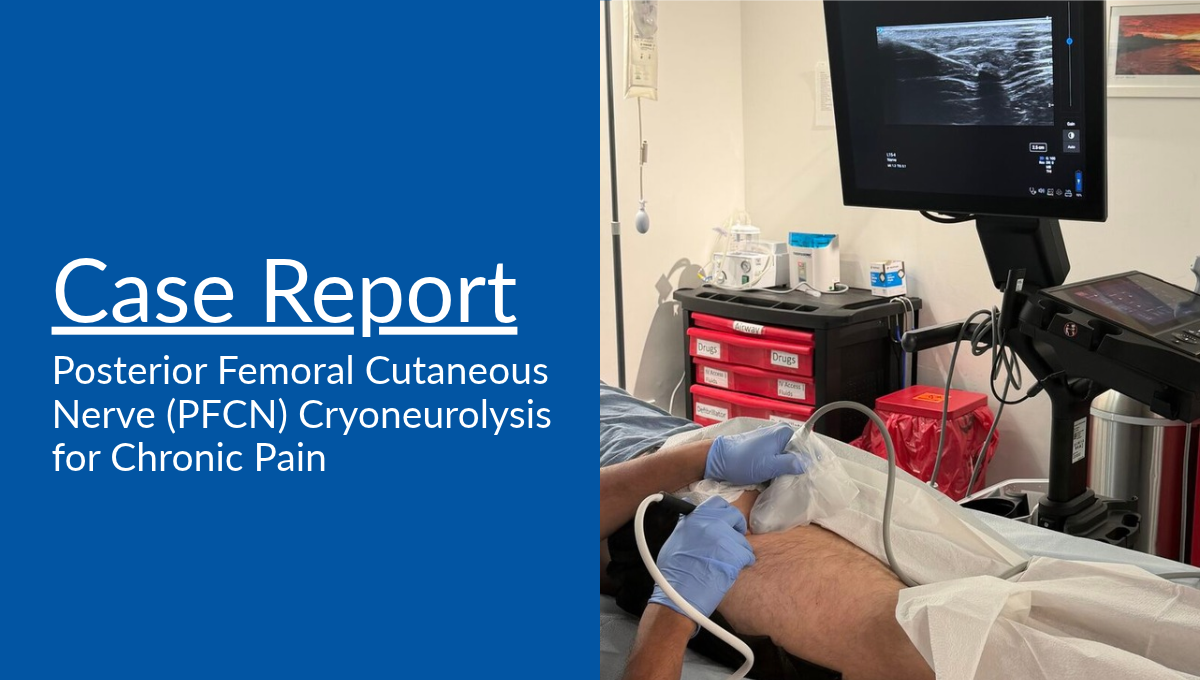
Chronic pelvic, buttock, and perineal pain can be challenging to evaluate, particularly when symptoms persist despite previous interventions.
Presented by Dr. Arun Kalava, this clinical case describes a 60-year-old male with a history of more than 25 years of left-sided pain who experienced partial relief following pudendal nerve decompression and previous cryoablation procedures. A subsequent diagnostic block of the posterior femoral cutaneous nerve (PFCN) provided greater than 80% temporary pain relief, suggesting that this nerve may contribute to his symptoms.
Understanding The Posterior Femoral Cutaneous Nerve
The posterior femoral cutaneous nerve (PFCN) is a sensory nerve originating from the sacral plexus. Its branches provide sensation to the posterior thigh, inferior buttock, and portions of the perineal region.[1,2]
Its sensory distribution makes the PFCN relevant to the anatomical evaluation of buttock, posterior thigh, and perineal pain. Its perineal branches and their relationship with neighboring nerves have been described in anatomical studies.[1,2] Clinical assessment and diagnostic nerve blocks may help physicians investigate the potential nerve source and determine appropriate treatment options.
References
Surgical and anatomical landmarks for the perineal branch of the posterior femoral cutaneous nerve: implications in perineal pain syndromes. Journal of Neurosurgery, 2009.
Origin, course, and distribution of the posterior femoral cutaneous nerve and the spatial relationship among its branches. Anatomical Science International, 2023.
Clinical Case with Dr. Arun Kalava
Arun Kalava, M.D., EDRA
Dr. Arun Kalava is a board-certified anesthesiologist with fellowship training from the Mayo Clinic and founder of TampaPainMD. He is also Chairman of the American Society for Post Surgical Pain (ASPSP), and his clinical practice focuses on regional anesthesia, chronic pain, and ultrasound-guided interventional procedures.
Clinical Case
A 60-year-old male presented with a history of left-sided pain lasting more than 25 years. He described a burning and aching sensation localized to the left buttock, extending toward the region immediately proximal to the hamstring.
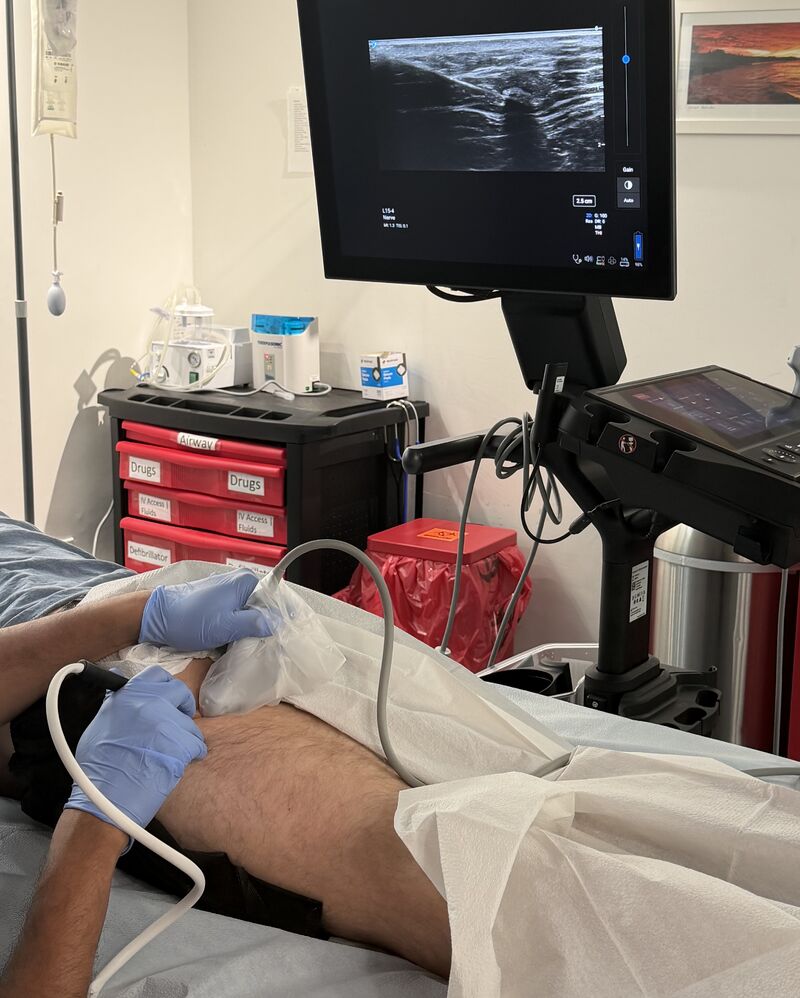
His symptoms were primarily triggered by prolonged sitting over multiple days and bending, with a reported pain intensity of 3/10.
In October 2020, the patient underwent surgical decompression of the pudendal nerve, which provided approximately 50% pain relief.
He subsequently underwent two cryoanalgesia procedures, in April 2025 and March 2026. Although these interventions provided some relief, residual symptoms persisted, including tenderness and soreness associated with prolonged sitting and bending.
A diagnostic block of the posterior femoral cutaneous nerve using lidocaine resulted in greater than 80% pain relief for approximately 2–4 hours. Given the location and characteristics of his remaining pain, further evaluation focused on the potential contribution of the posterior femoral cutaneous nerve.
Why Consider Peripheral Nerve Cryoneurolysis?
For appropriately selected patients, peripheral nerve cryoneurolysis may offer several characteristics:
- Minimally invasive, percutaneous approach
- Targeted treatment of sensory nerve pathways
- Can be performed under image guidance
- May provide prolonged interruption of sensory nerve conduction
- Can be incorporated into a broader multimodal pain management strategy
Cryo PainBlocker® System
The Epimed Cryo PainBlocker® system was used in this case. The system is designed to support controlled cryotherapy for peripheral nerve procedures and may be used for a variety of sensory nerve applications when clinically appropriate.
Learn More about the Cryo PainBlocker® and its applications here.
Hands-On Cryoneurolysis Training
Continue exploring current approaches to post-surgical and peripheral nerve pain at the 2nd Annual Conference on Post-Surgical Pain, taking place December 5–6, 2026, in Tampa, Florida, USA.
The conference will feature world-class lectures and two ultrasound workshops, offering opportunities for physicians to expand their knowledge and develop practical skills in interventional pain management.
Learn more and register: 2nd Annual Conference on Post-Surgical Pain
This case is presented for educational purposes only and reflects the clinical experience shared by Dr. Arun Kalava. Individual patient outcomes may vary. Treatment decisions should be based on physician judgment, patient selection, diagnostic evaluation, and clinical circumstances.




 United States