Sign in
 Create Account
 Shop


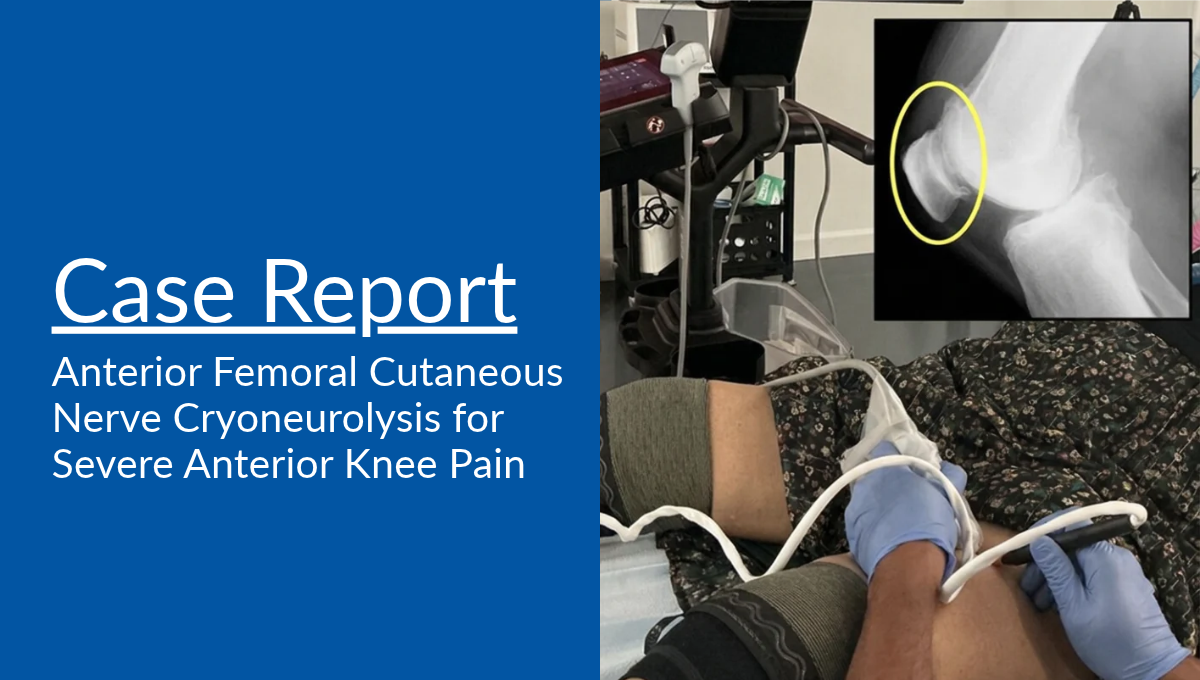
Chronic knee pain associated with advanced osteoarthritis can significantly affect mobility and daily activities. While treatment options range from conservative management and injections to surgical intervention, targeted peripheral nerve procedures may be considered for selected patients with a significant sensory component to their pain.
The following clinical case, shared by Dr. Arun Kalava, M.D., EDRA, describes an 85-year-old woman with severe activity-related anterior knee pain associated with grade 4 osteoarthritis. After a diagnostic anterior femoral cutaneous nerve (AFCN) block provided complete temporary relief, the patient was selected for AFCN cryoneurolysis using the Epimed Cryo PainBlocker® system.
Understanding The Anterior Femoral Cutaneous Nerve Pain
The anterior femoral cutaneous nerve (AFCN) consists of sensory branches of the femoral nerve that contribute to sensation over the anterior thigh and the anterior aspect of the knee. Because these branches provide superficial sensory innervation around the knee, they have been investigated as potential targets for cryoneurolysis in patients with knee pain, including pain associated with osteoarthritis and knee surgery (Dasa et al., 2016; Speelziek et al., 2024).
Clinical Case with Dr. Arun Kalava
Arun Kalava, M.D., EDRA
Dr. Arun Kalava is a board-certified anesthesiologist with fellowship training from the Mayo Clinic and founder of TampaPainMD. He is also Chairman of the American Society for Post Surgical Pain (ASPSP), and his clinical practice focuses on regional anesthesia, chronic pain, and ultrasound-guided interventional procedures.
Clinical Case
An 85-year-old female from the Bahamas presented with grade 4 osteoarthritis involving both the patellofemoral and femorotibial joints.
At rest, her pain was 0/10. However, standing and walking produced severe pain rated 10/10, described primarily as anterior knee pain.
Despite the severity of her activity-related symptoms, her lack of resting pain suggested that the clinical presentation was particularly associated with weight-bearing and ambulation.
Diagnostic AFCN Block and Cryoneurolysis Procedure
To evaluate the potential contribution of the anterior femoral cutaneous nerve to her pain, an AFCN block with 0.5% ropivacaine was performed.
The patient experienced 100% pain relief for up to one day following the diagnostic block.
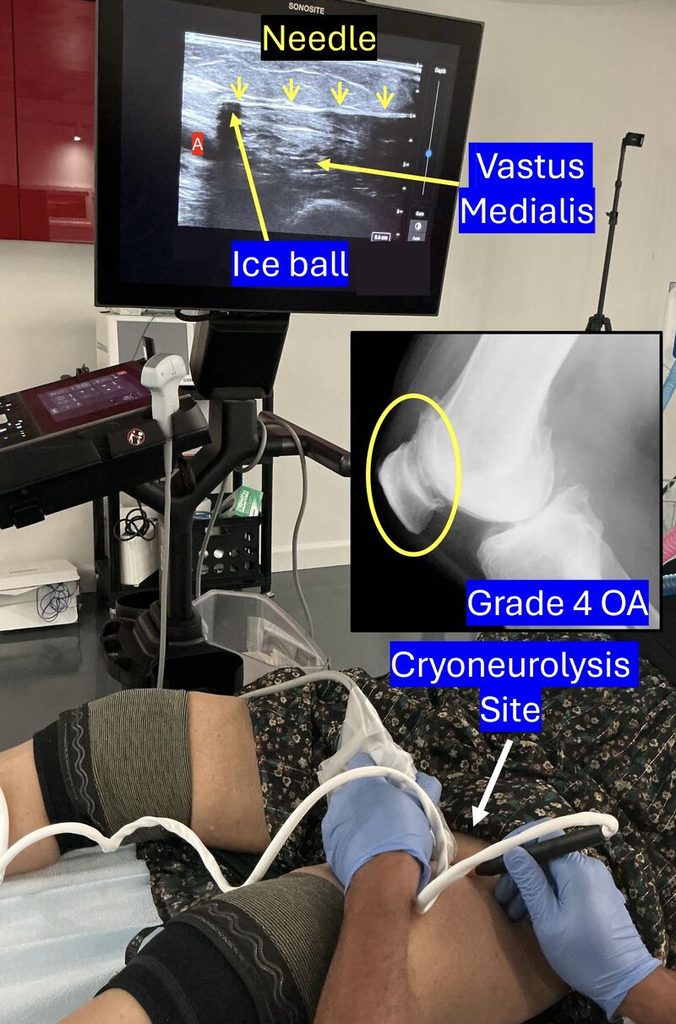
Following the diagnostic response, the patient underwent cryoneurolysis of the anterior femoral cutaneous nerve using the Epimed Cryo PainBlocker® system.
Cryoneurolysis uses controlled cooling to temporarily disrupt peripheral nerve conduction. The technique has been investigated for sensory nerve targets associated with knee pain and may provide a minimally invasive option for selected patients.
Following the procedure, the patient reported minimal pain during ambulation. At the time the case was shared, she hoped that improved pain control would allow her to continue managing her condition without immediately proceeding to knee replacement surgery.
Why Consider Peripheral Nerve Cryoneurolysis?
For appropriately selected patients, peripheral nerve cryoneurolysis may offer several characteristics:
- Minimally invasive, percutaneous approach
- Targeted treatment of sensory nerve pathways
- Can be performed under image guidance
- May provide prolonged interruption of sensory nerve conduction
- Can be incorporated into a broader multimodal pain management strategy
Cryo PainBlocker® System
The Epimed Cryo PainBlocker® system was used in this case to perform targeted cryoneurolysis of the AFCN.
The system is designed to support controlled cryotherapy for peripheral nerve procedures and may be used for a variety of sensory nerve applications when clinically appropriate.
Learn More about the Cryo PainBlocker® and its applications here.
This case is presented for educational purposes only and reflects the clinical experience shared by Dr. Arun Kalava. Individual patient outcomes may vary. Treatment decisions should be based on physician judgment, patient selection, diagnostic evaluation, and clinical circumstances.





 United States