Sign in
 Create Account
 Shop
Shop


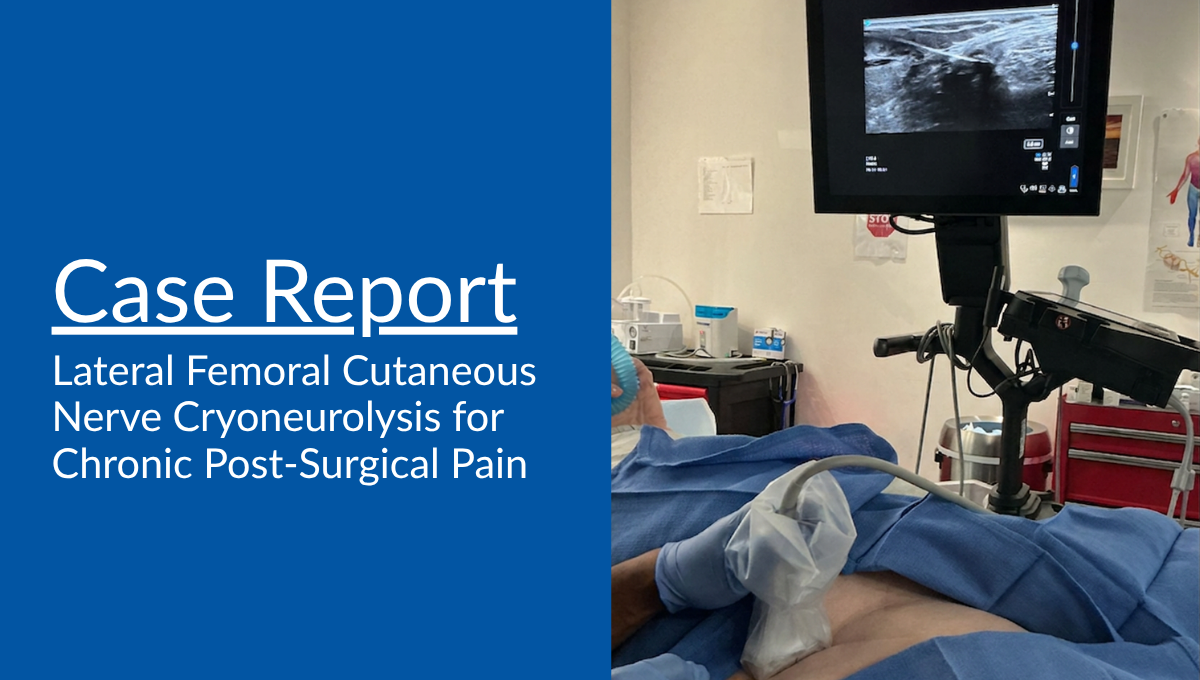
Chronic post-surgical pain can significantly affect mobility and daily function, particularly when neuropathic pain develops following orthopedic procedures. The following case, shared by Dr. Arun Kalava, M.D., EDRA, describes a 67-year-old female who developed persistent pain and sensory changes following anterior total hip arthroplasty. After experiencing significant functional limitations for nine months, diagnostic nerve blocks were used to identify the involved peripheral nerves before proceeding with cryoneurolysis.
Understanding Post-Surgical Peripheral Nerve Pain
The lateral femoral cutaneous nerve (LFCN) is a purely sensory nerve that typically arises from the L2–L3 nerve roots and supplies sensation to the anterolateral thigh. Because of its variable anatomy and proximity to the surgical field, the LFCN can be affected during anterior approaches to total hip arthroplasty. (Gatz et al., 2021; Saranteas et al., 2024)
Irritation or injury of the LFCN can produce neuropathic symptoms such as burning pain, altered sensation, hyperalgesia, and allodynia in its distribution. Identifying the specific nerve contributing to post-surgical pain can be an important part of treatment planning. Diagnostic nerve blocks may be used to obtain information about a suspected pain generator and help determine whether a peripheral nerve is an appropriate target for further intervention.
Clinical Case with Dr. Arun Kalava
Arun Kalava, M.D., EDRA
Dr. Arun Kalava is a board-certified anesthesiologist with fellowship training from the Mayo Clinic and founder of TampaPainMD. He is also Chairman of the American Society for Post Surgical Pain (ASPSP), and his clinical practice focuses on regional anesthesia, chronic pain, and ultrasound-guided interventional procedures.
Clinical Case
A 67-year-old female developed significant chronic pain and functional limitations following anterior total hip arthroplasty.
For approximately nine months after surgery, she was unable to get out of bed and had substantial difficulty performing normal activities.
Clinical examination demonstrated:
- Hyperalgesia and Allodynia in the LFCN distribution
- Adductor muscle spasm
These findings suggested involvement of both sensory and motor peripheral nerve pathways contributing to her post-surgical symptoms.
Diagnostic Nerve Blocks
To evaluate the suspected pain generators, diagnostic nerve blocks were performed. A lateral femoral cutaneous nerve block using 0.5% ropivacaine and an obturator nerve block using 0.25% ropivacaine produced greater than 80% pain relief.
The significant response to the diagnostic blocks supported the LFCN and obturator nerve as relevant targets for further intervention.
Cryoneurolysis Procedure
Based on the patient’s clinical presentation and response to diagnostic nerve blocks, cryoneurolysis was performed on:
- Lateral femoral cutaneous nerve (LFCN)
- Anterior division of the obturator nerve
- Posterior division of the obturator nerve
Cryoneurolysis, a minimally invasive percutaneous procedure, was considered due to its ability to provide targeted treatment of the nerves contributing to the patient’s pain while preserving the nerve’s connective tissue structure.
- Minimally invasive, percutaneous approach
- Preservation of the nerve’s connective tissue architecture
- May provide prolonged pain relief while reducing the need for more invasive interventions
Cryo PainBlocker® System
The Cryoanalgesia System used in this case was the Epimed Cryo PainBlocker® system. The system is designed to support peripheral nerve cryoneurolysis procedures by delivering controlled freezing cycles to the targeted nerve.
Using the Joule-Thomson effect, the system can achieve temperatures of approximately −70°C, enabling controlled cryolesioning of the targeted nerve.
The Cryo PainBlocker® may be used for a range of peripheral nerve applications when cryoneurolysis is clinically appropriate.
Learn More about the Cryo PainBlocker® and its applications.
Clinical Perspective
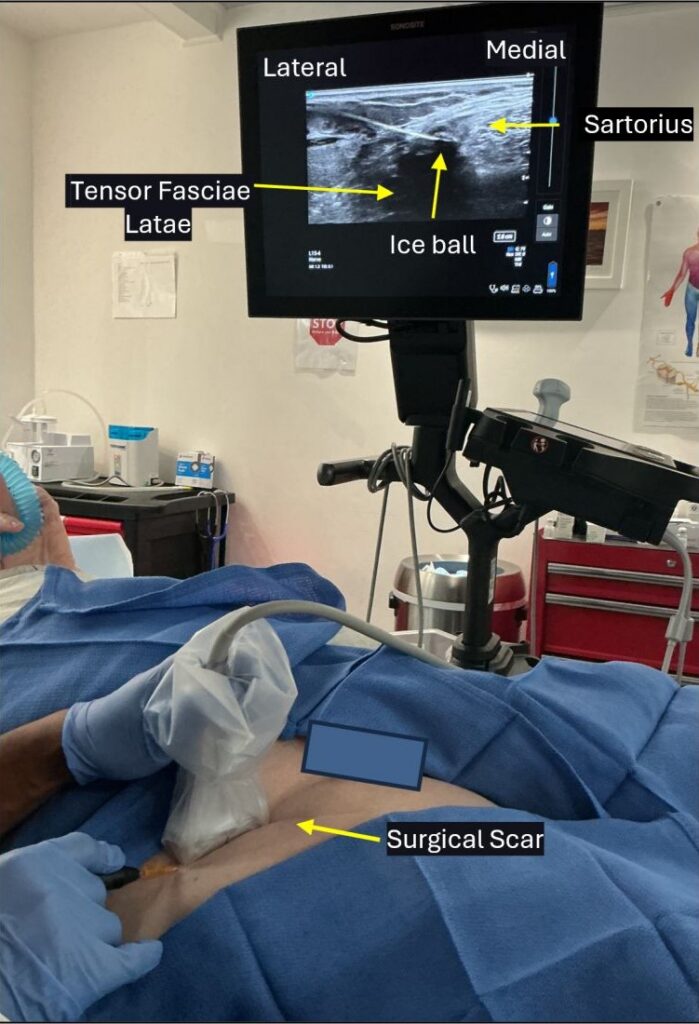
This case demonstrates how cryoneurolysis may be incorporated into the management of chronic post-surgical pain when symptoms are localized to identifiable peripheral nerve distributions.
The patient’s response to diagnostic LFCN and obturator nerve blocks provided important information for treatment planning before proceeding with cryoneurolysis.
For appropriately selected patients, targeted peripheral nerve cryoneurolysis may represent a minimally invasive option within a broader multimodal approach to chronic post-surgical pain.
This case is presented for educational purposes only and reflects the clinical experience shared by Dr. Arun Kalava. Individual patient outcomes may vary, and treatment decisions should be based on physician judgment, patient selection, and clinical evaluation.






 United States