Sign in
 Create Account
 Shop
Shop


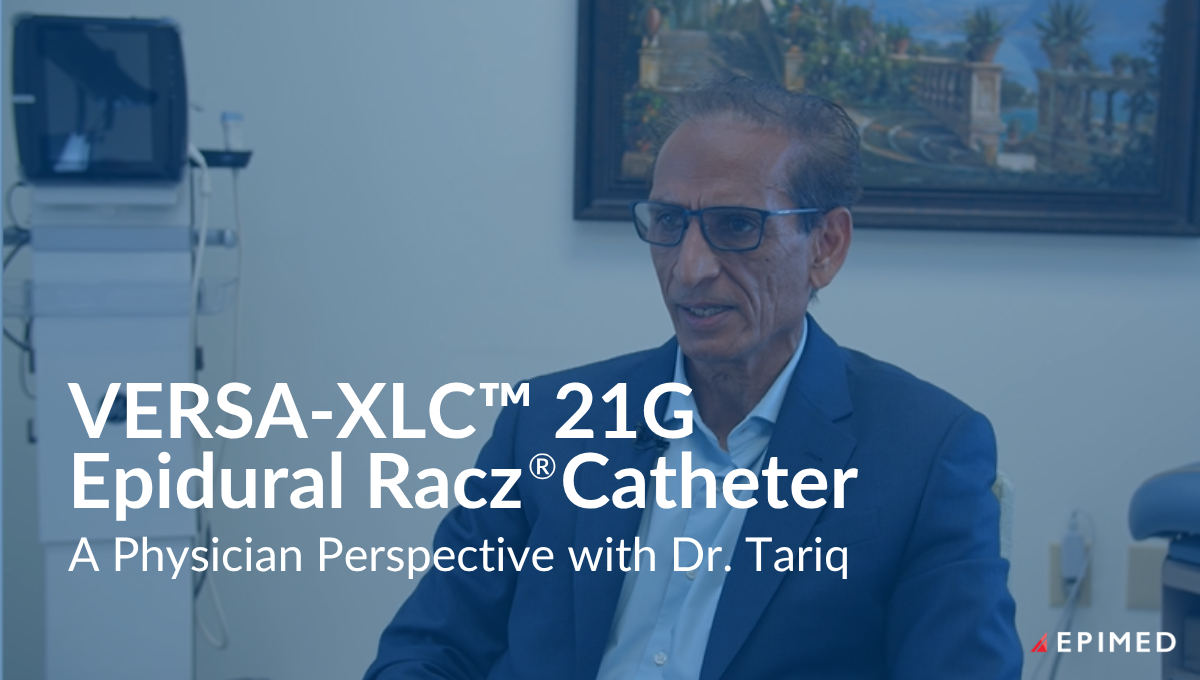
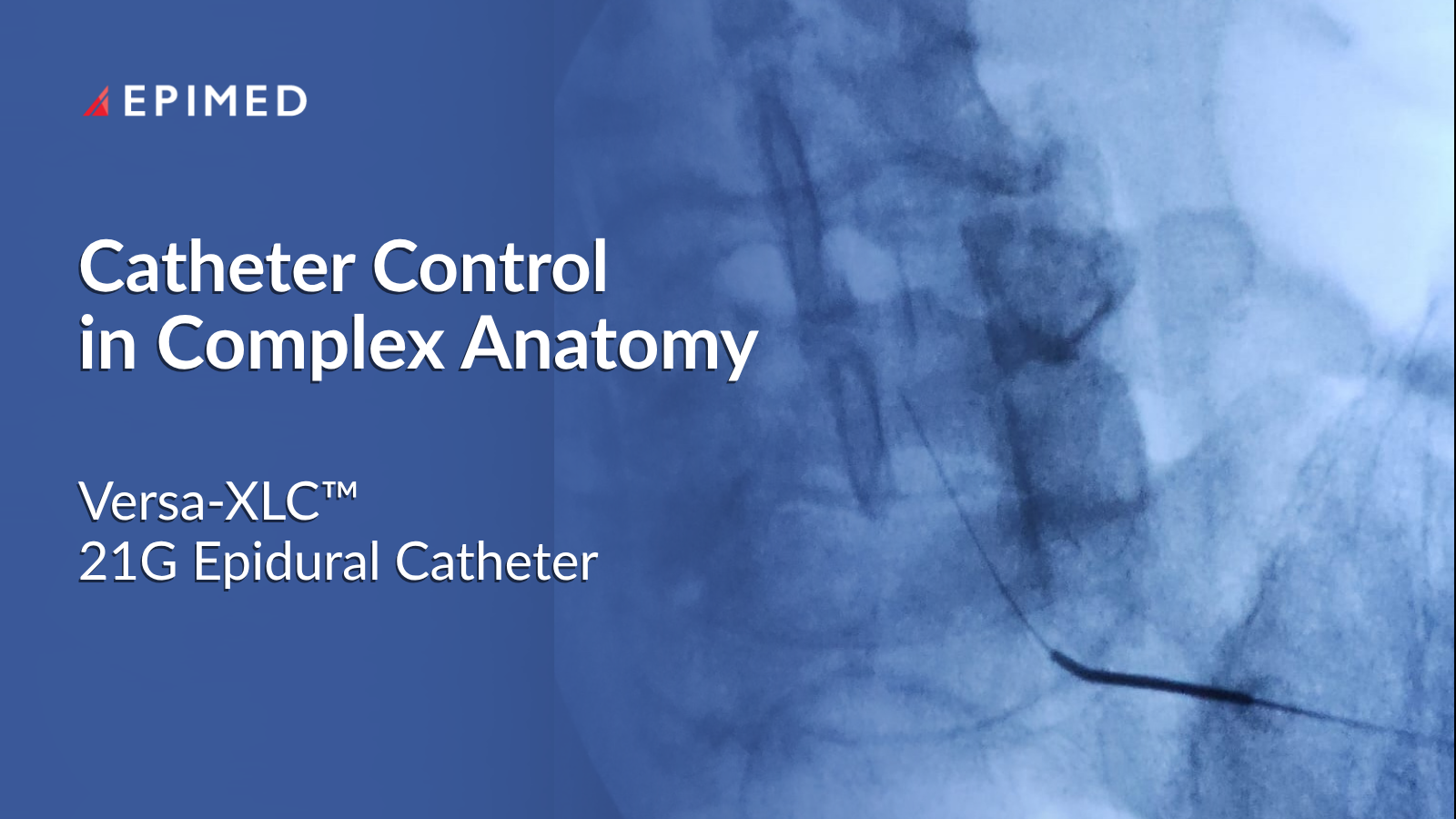
Dr. Mohammad Tariq discusses his clinical experience with the VERSA-XLC™ 21G Epidural Racz® Catheter.
Scar tissue, previous spine surgery, spinal stenosis, and complex epidural anatomy can make catheter advancement, positioning, and medication delivery more demanding.
Drawing from his clinical experience, Dr. Tariq discusses these procedural challenges and the VERSA-XLC™ design features he finds most valuable when navigating difficult epidural anatomy.
The Challenge of Catheter Navigation Through Epidural Scar Tissue
According to Dr. Tariq, one of the most common challenges during catheter-based epidural procedures is advancing the catheter through dense epidural scar tissue.
As he explains, catheter advancement may become restricted, and injecting contrast through a conventional single-port catheter can become increasingly difficult if the distal opening becomes obstructed by epidural fibrosis.
“Sometimes I pull the catheter back, try to re-manipulate it, change the direction, go intravascular, pull it back again, redirect it, and then encounter the scar tissue once more.”
These situations often require repeated repositioning and careful fluoroscopic guidance before satisfactory epidural flow is achieved.
VERSA-XLC™ Design Features Highlighted by Dr. Tariq
Drawing from his clinical experience, Dr. Tariq highlighted several design features of the VERSA-XLC™ Epidural Catheter that he believes support procedural workflow during challenging epidural cases.
Why Do Multiple Side Ports Matter in Challenging Epidural Cases?
One of the features, Dr. Tariq emphasized the VERSA-XLC™ three side port design. In the interview, he explains that when one port encounters resistance, the other ports may still allow injection.
“All along we needed a catheter that has multiple ports, so if one is stuck, other ports still can inject.”
He recalled a particularly challenging post-surgical case where contrast dispersed easily despite extensive fibrosis. “Injecting the dye was so easy because it was spreading out through three ports.”
Stylet-to-Tip Support and Catheter Manipulation
Dr. Tariq highlighted the stylet extending to the catheter tip and the increased stiffness of the VERSA-XLC™. In his experience, these characteristics made the catheter easier to manipulate and direct in challenging cases.
Compared with more flexible catheter designs, he found it easier to redirect while maintaining control.
Fluoroscopic Visibility and Catheter Redirection
Visualization remains an essential component of catheter-guided epidural procedures.
Dr. Tariq also emphasized catheter visibility under fluoroscopy. He describes situations in which contrast can make the catheter tip more difficult to visualize and explains that, in his experience, the VERSA-XLC™ was easier to see and redirect under fluoroscopy. “Easy to manipulate, easy to redirect, easy to see under fluoroscopy.”
A Physician Perspective on Catheter Design
Dr. Tariq’s experience highlights how catheter design considerations—including medication delivery through multiple side ports, catheter manipulation, redirection, and fluoroscopic visibility—can become particularly relevant in challenging epidural procedures involving scar tissue and complex anatomy.
About the VERSA-XLC™ 21G Epidural Racz® Catheter
The VERSA-XLC™ Epidural Catheter is a 21G spring-wound Racz® catheter designed to support catheter-guided epidural procedures. Key features include:
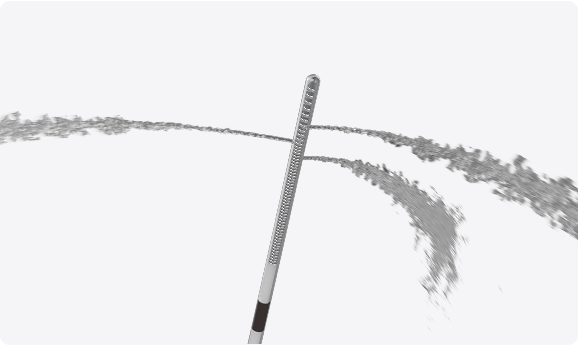
- Atraumatic closed-end tip with three side ports.
- Patented Racz® Bend Marks.
- Stiffer XL Stylet.
- Surgical-grade stainless steel construction.
- Radiopaque design for fluoroscopic visualization.
- 1:1 torque response, kink and collapse-resistant design.
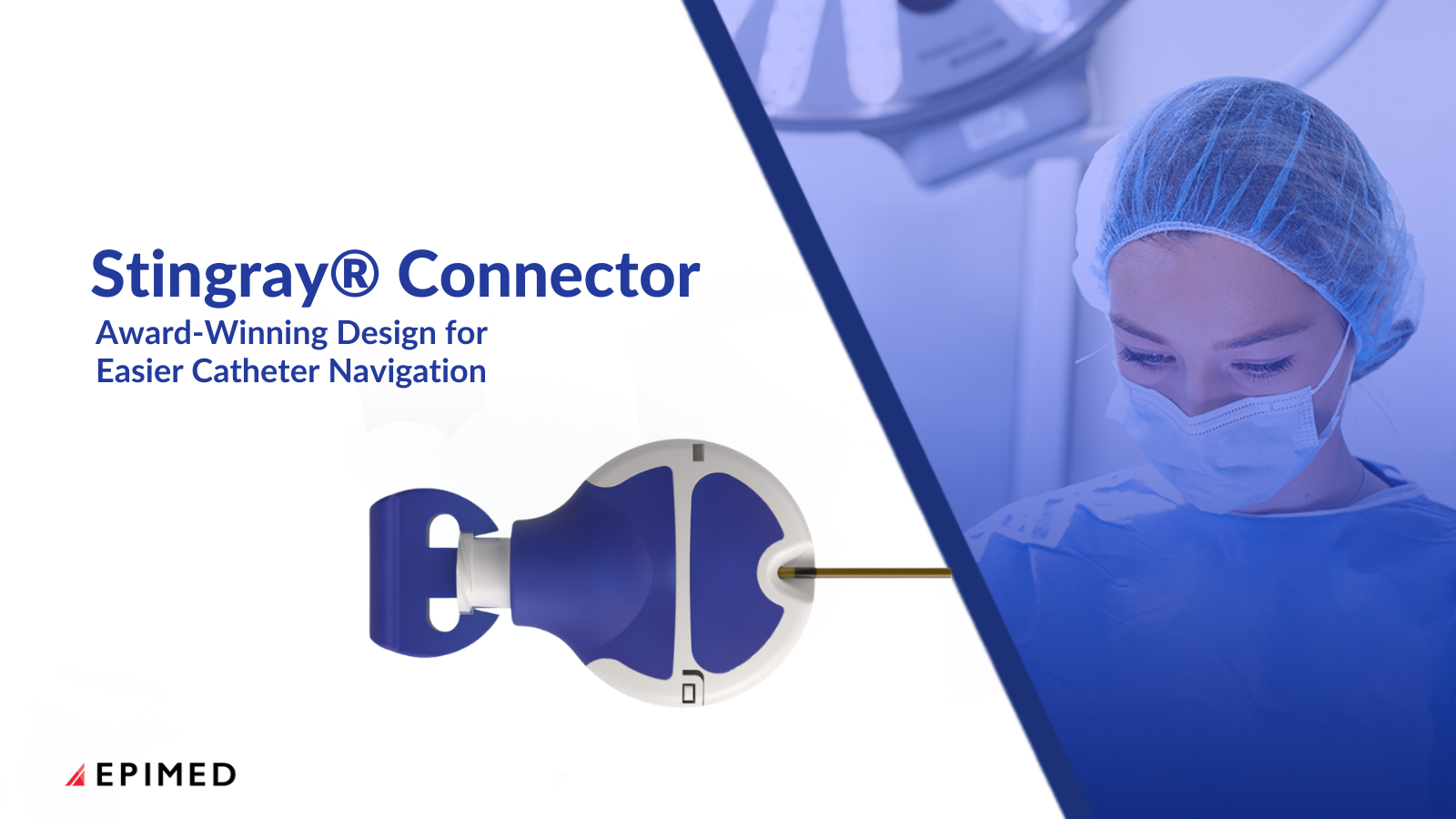
The VERSA-XLC™ is compatible with Epimed’s RX-2™ Coudé®, RX Coudé®, RX Straight epidural needles, and the Stingray® Connector.
About Mohammad Tariq, MD
Dr. Tariq is a board-certified specialist in Pain Management and Anesthesiology with more than 25 years of experience. He is highly experienced in treating chronic pain and specializes in advanced therapies, including implanted Morphine and Baclofen pumps for pain and spasticity management. Dr. Tariq is recognized for his expertise in managing complex pain conditions and works closely with local physicians and spine surgeons to provide comprehensive care.



 United States