Sign in
 Create Account
 Shop
Shop


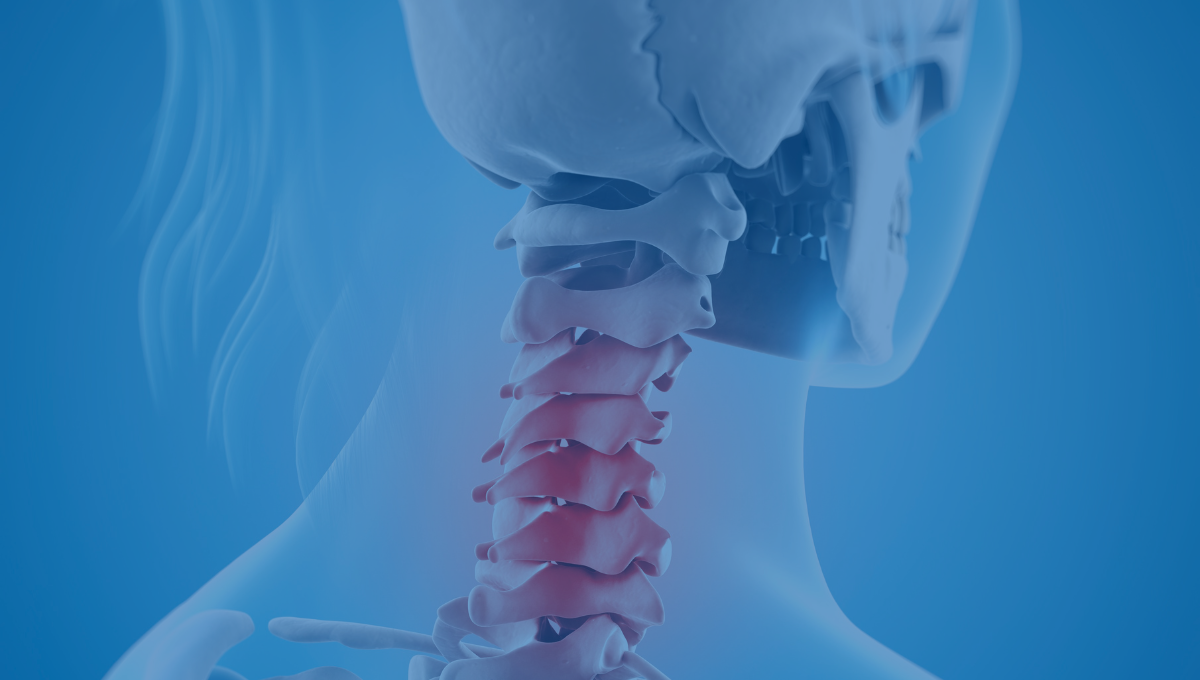
Understanding Occipital Neuralgia (ON)
Occipital neuralgia is a debilitating condition that can significantly affect daily activity, sleep, and overall quality of life. The posterior scalp is innervated chiefly by three nerves: the Greater Occipital Nerve (GON), the Lesser Occipital Nerve (LON), and the Third Occipital Nerve (TON). Entrapment, inflammation or irritation of one or more of these nerves—often stemming from muscle tension, cervical facet disease, trauma or fibrous bands—can lead to a distinct clinical syndrome: occipital neuralgia (ON).
These nerves can become compressed, inflamed, or sensitized due to:
- Muscle tension or spasm (e.g., semispinalis capitis, trapezius)
- Post-traumatic changes (whiplash, C2 root irritation)
- Post-surgical scarring
- Arthropathy of the upper cervical facets
Symptoms typically include shooting pain from the upper cervical region toward the occiput, scalp tenderness, and exacerbation with palpation over the nerve trajectory.
Patients with occipital neuralgia (ON) may exhibit symptoms that resemble migraine or cluster headaches such as photophobia, phonophobia, dizziness, nausea and vomiting, and posterior scalp paresthesia, further complicating diagnosis. These overlapping features often lead to misdiagnosis, with ON commonly mistaken for conditions such as migraine, fibromyalgia, cervical spine arthritis, cervical disc disease, or cervicogenic headache. A thorough individual assessment is essential before recommending and initiating treatment.
Why Consider Cryoneurolysis for Occipital Neuralgia (ON)?
Standard treatments include medications such as neuropathic agents and NSAIDs, occipital nerve blocks, and, in some cases, radiofrequency ablation or surgical decompression. While traditional treatments such as nerve blocks, medications, and Botox may offer temporary relief, some patients do not respond to these approaches and may benefit from newer, less invasive treatment options.
Cryoneurolysis allows for an advanced, safe treatment option of treating occipital neuralgia without the side effects of repeated steroid use. A growing body of evidence supports cryoanalgesia as a safe, effective, and longer-lasting option for patients with chronic occipital nerve pain.1
Mechanism of Action of Cryoanalgesia
Cryoanalgesia uses controlled cooling to reduce nerve conduction. When a sensory nerve is cooled to sufficiently low temperatures, the axons undergo temporary Wallerian degeneration while the surrounding connective tissues (epineurium, perineurium, endoneurium) remain intact.
This preserved structure allows the nerve to regenerate over time. This mechanism distinguishes cryoneurolysis from destructive neurolytic techniques and is one reason it may be repeated when symptoms return.
Evidence
Blond & Schmutz (2015) reported significant pain reduction and sustained benefit in patients with chronic occipital neuralgia treated with cryoanalgesia, with favorable safety outcomes and no structural complications. Additional case reports and observational studies support cryoneurolysis as a regenerative, repeatable modality for occipital nerve–mediated headaches.
- A prospective pilot study of cryoneurolysis for occipital neuralgia found that 16 of 25 patients (64 %) reported reduced pain at one week, and many maintained benefit at one month.2
- In a small case series of 7 procedures in 6 patients with refractory greater occipital neuralgia, all patients experienced >50% pain reduction at 1 week, and 5 of 6 maintained this benefit at 1 and 3 months.3
- In a retrospective review of 22 patients with occipital neuralgia treated with cryoneurolysis, 20 patients (91%) reported improvement in pain symptoms, with 15 (68%) experiencing ≥50% pain relief. The average duration of relief was 3.8 months, and no serious adverse events were reported.4
Clinical Use of Cryoanalgesia for Occipital Neuralgia
Cryoneurolysis (or cryoanalgesia) is a technique wherein a cryoprobe is placed adjacent to the target nerve and the tissue is cooled to very low temperatures, producing Wallerian degeneration of the axon while preserving the nerve’s connective tissues (endoneurium, perineurium, epineurium) to allow regeneration.
Cryoneurolysis offers advantages over other neurolytic techniques like chemical neurolysis and radiofrequency ablation, including reduced damage to surrounding tissues and a lower risk of neuroma formation.
Who Is a Candidate and What Does the Procedure Involve?
Ideal patient candidates for occipital nerve cryoneurolysis include those with a clear diagnosis of occipital neuralgia, positive response to diagnostic occipital nerve block, and persistent symptoms despite conservative therapy.
Procedurally, ultrasound or CT-guided placement of a cryoprobe adjacent to the nerve ensures accurate targeting. Lesioning typically involves freeze cycles (commonly 2 cycles of 90 seconds each) until an ice ball envelops the nerve region; then the probe is withdrawn. Follow-up typically shows pain relief onset within days, and many patients experience meaningful relief lasting 3–6 months or longer, after which repeat treatment may be considered.
Role of Cryo Platforms in Procedural Consistency
The clinical effectiveness of occipital nerve cryoneurolysis depends on appropriate patient selection and precise technique. Equally important is the ability to deliver controlled and reproducible freeze–thaw cycles.
In this context, cryo platforms designed for peripheral nerve applications support procedural consistency. They allow predictable cooling, stable ice ball formation, and efficient defrost.
These characteristics are particularly relevant for superficial sensory nerves in the head and neck region. In this area, precision and tissue preservation are essential.
The Cryo PainBlocker™ system by Epimed is an example of a cryo platform used for peripheral nerve cryoneurolysis in interventional pain practice. Its technical profile aligns with the procedural requirements of occipital nerve interventions, where consistency and control are critical to applying the technique reliably.
Importantly, technology supports—but does not replace—clinical judgment, anatomical expertise, and appropriate patient selection.
Clinical Considerations and Common Questions
Is cryoanalgesia considered a destructive nerve technique?
No. Cryoneurolysis produces temporary Wallerian degeneration of the axon while preserving the nerve’s connective tissue structures, allowing regeneration over time.
How does cryoneurolysis differ from radiofrequency ablation in occipital neuralgia?
Cryoneurolysis preserves the epineurium, perineurium, and endoneurium, which may reduce the risk of neuroma formation and allows repeat treatment if symptoms recur.
What duration of effect has been reported following occipital nerve cryoneurolysis?
Published studies report variable duration of analgesia, commonly ranging from several weeks to several months, depending on patient factors and technique
This article is intended for educational use by healthcare professionals and does not replace independent clinical judgment. Epimed disclaims liability related to the use of this information.
- Stogicza, Agnes & Trescot, Andrea & Rabago, David. (2019). New Technique for Cryoneuroablation of the Proximal Greater Occipital Nerve. Pain Practice. 19. 10.1111/papr.12779 ↩︎
- Grigsby, E., Radnovich, R., & Nalamachu, S. (2021). Efficacy and Safety of Cryoneurolysis for Treatment of Chronic Head Pain Secondary to Occipital Neuralgia: A Pilot Study. Local and regional anesthesia, 14, 125–132. doi.org/10.2147/LRA.S324527
↩︎ - Kastler, A., Attyé, A., Maindet, C., Nicot, B., Gay, E., Kastler, B., & Krainik, A. (2018). Greater occipital nerve cryoneurolysis in the management of intractable occipital neuralgia. Journal of Neuroradiology, 45(6), 386–390. https://doi.org/10.1016/j.neurad.2017.11.002
↩︎ - Kim CH, Hu W, Gao J, Dragan K, Whealton T, Julian C. Cryoablation for the treatment of occipital neuralgia. Pain Physician. 2015 May-Jun;18(3):E363-8. PMID: 26000683. ↩︎






 United States