Sign in
 Create Account
 Shop
Shop


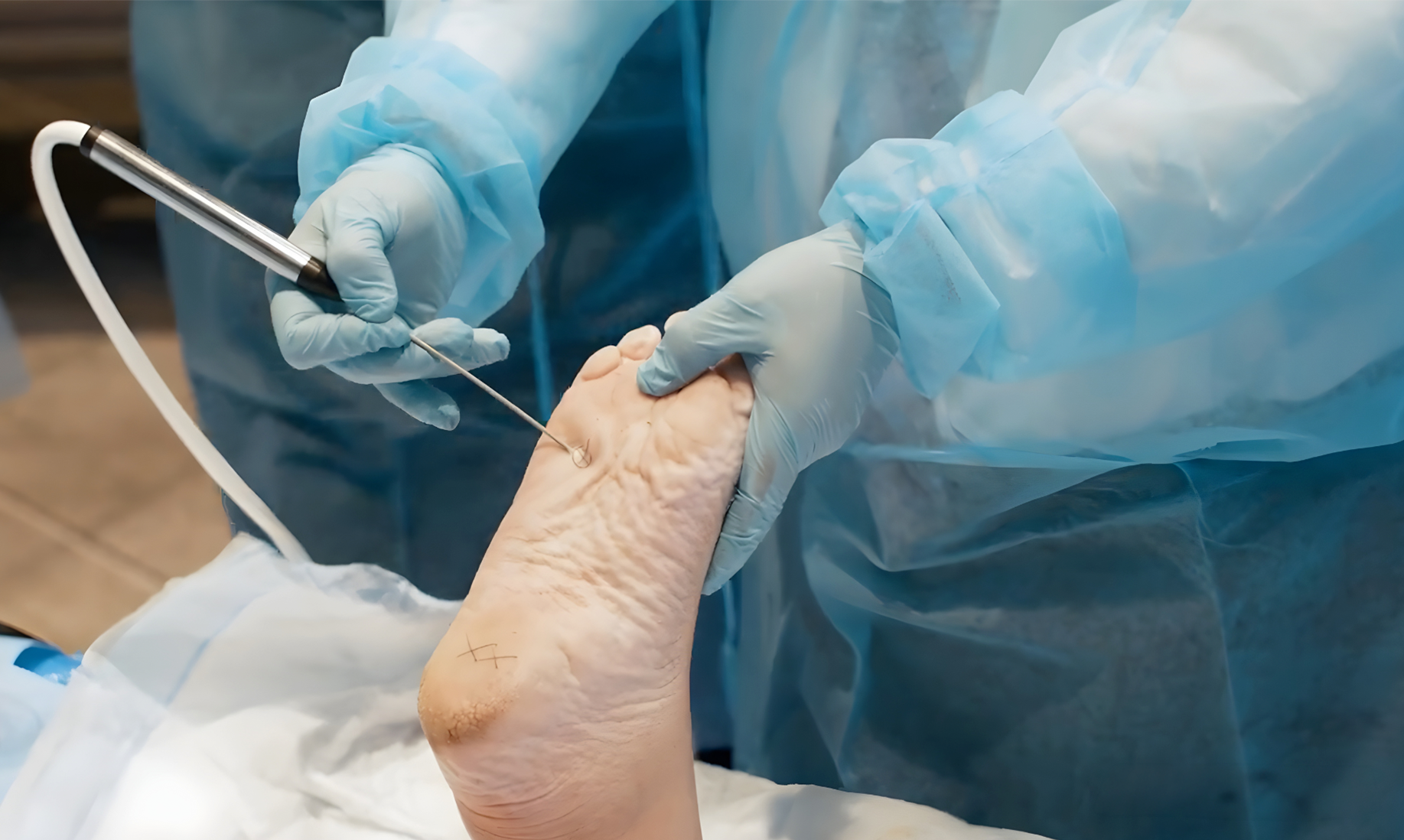
Procedural application in podiatric practice
Plantar verrucae are a frequent finding in podiatric practice and may present with localized pain, pressure sensitivity, or functional discomfort.
Management often includes topical, chemical, or mechanical approaches, sometimes repeated over multiple visits.
In certain situations, lesion persistence or recurrence may prompt clinicians to reflect on procedural approaches that can be performed within an outpatient setting.
This article provides a procedural perspective on cryoanalgesia in the context of verruca management, based on observations from cadaver-based podiatric training.
Clinical context
Verrucae may present with variable depth, size, and tissue involvement, contributing to heterogeneous clinical presentation.
Response to conservative or destructive approaches may vary, and repeat interventions are not uncommon in routine practice.
When lesions persist or recur, clinicians may consider procedural approaches based on lesion characteristics, anatomical location, and surrounding tissue structures.
No treatment recommendations, outcomes, or comparative claims are discussed.
Procedural perspective
Cryoanalgesia is a percutaneous, image-guided technique discussed during podiatric training in the context of selected foot conditions.
In the context of verruca, procedural discussion focused on lesion characteristics and tissue-level considerations rather than nerve targeting or standardized technique.
Procedural considerations discussed during training included:
- Visual and tactile assessment of lesion boundaries prior to application
- Consideration of lesion depth and surrounding tissue thickness
- Awareness of superficial tissue response during controlled cold application
- Attention to skin surface changes as part of procedural observation
- Recognition that approach may vary depending on lesion size, location, and clinician experience
These points were discussed as observational considerations within a training context, not as procedural instructions or treatment guidance.
Workshop excerpt
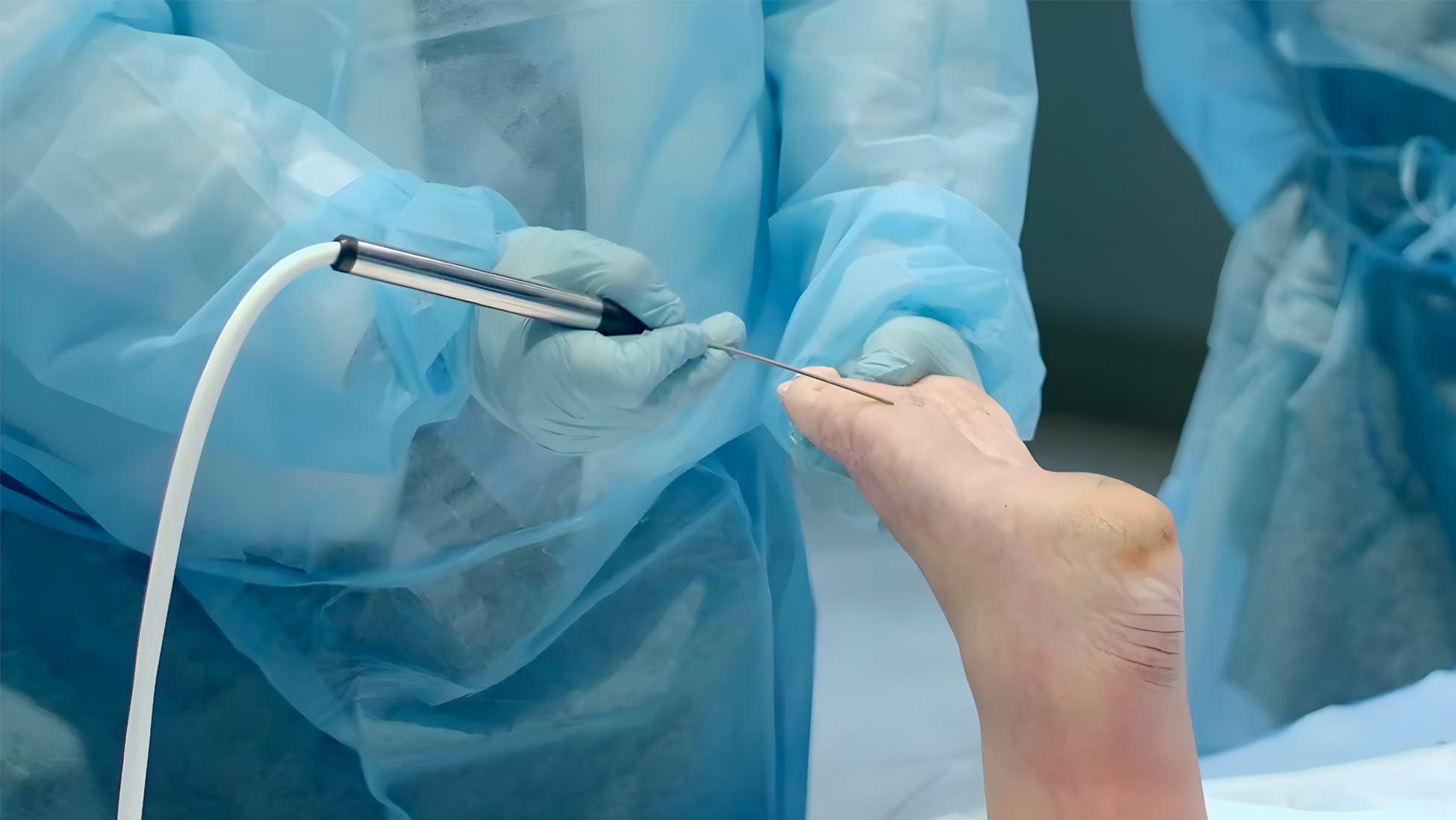
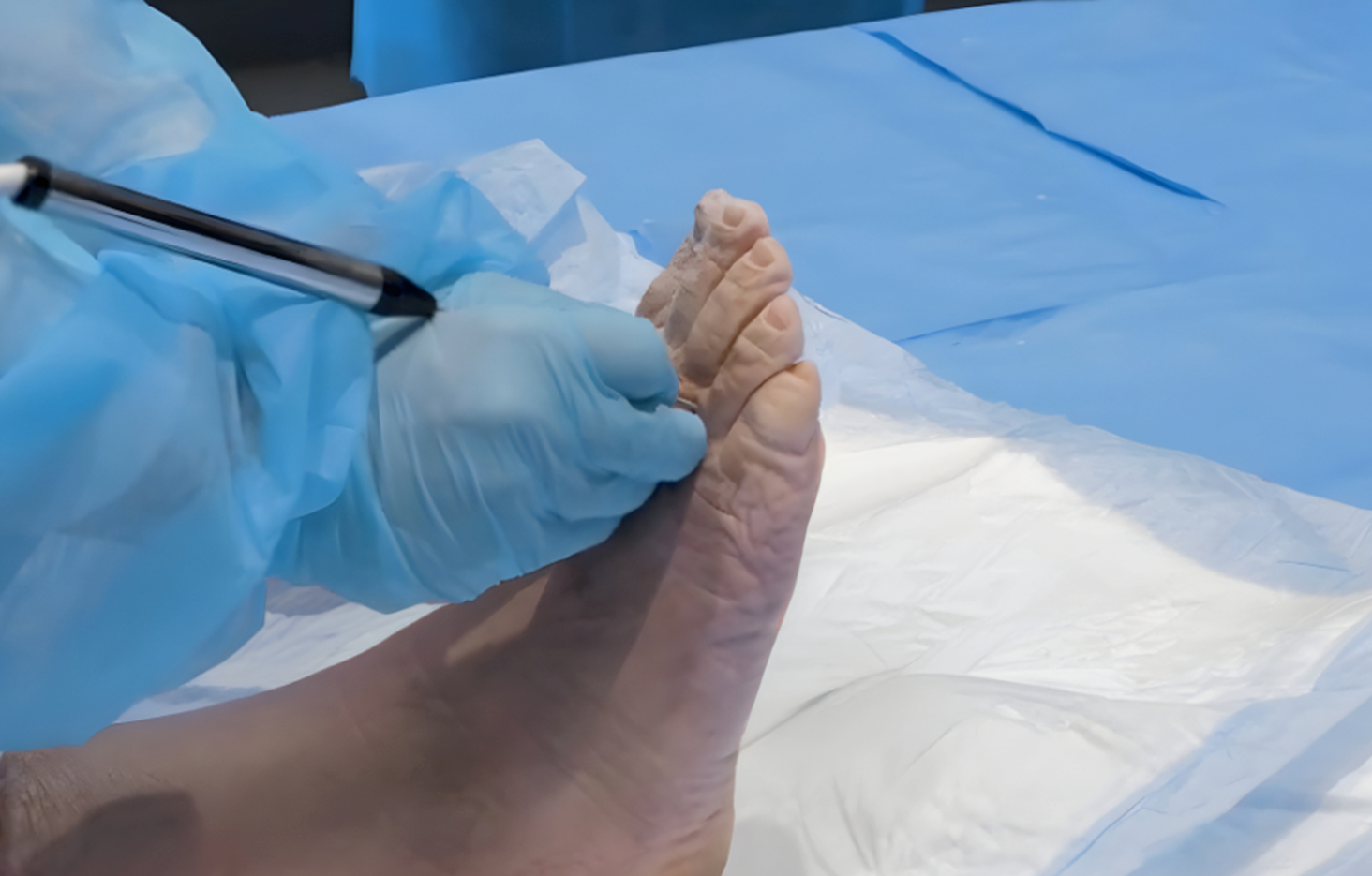
This short excerpt was recorded during a podiatric training workshop with Dr Brian Allen, podiatrist, illustrating how cryoanalgesia may be approached in a verruca context. Brian Allen_Verruca_Epimed.mp4
The footage was recorded in a cadaver-based educational setting and is presented to provide visual context for the procedural considerations discussed above.
It is intended for illustrative purposes only.
Excerpt from the training footage:
Access the full procedural footage
The complete training video provides extended visual context from the cadaver-based workshop, including additional procedural footage beyond the short excerpt shown on this page.
Full procedural footage is available upon request to healthcare professionals.
Request access to full procedural video.
Procedural environment
Procedures illustrated on this page were documented during a cadaver-based podiatric training workshop using the Cryo PainBlocker™ cryoanalgesia system.
Conclusion
Cryoanalgesia represents one of several procedural approaches considered in the management of verrucae within podiatric practice.
The perspective presented here is intended to support procedural reflection and clinical awareness, rather than to define technique or indication.
This content is provided for healthcare professionals only and for educational purposes.
It does not constitute clinical recommendations, treatment protocols, or outcome claims.
Explore related articles
– Cryoanalgesia for Plantar fascia
– Cryoanalgesia for Bursitis
– Cryoanalgesia for Morton’s Neuroma




 United States