Sign in
 Create Account
 Shop
Shop


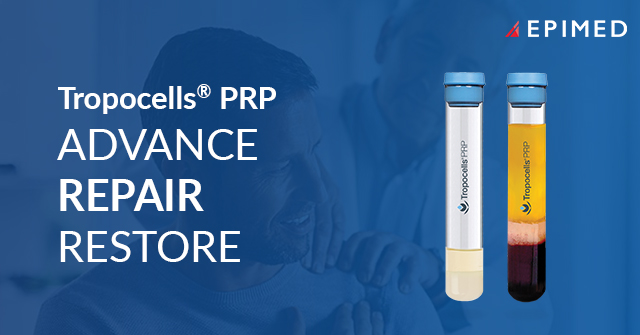
Platelet-Rich Plasma (PRP) therapy represents a promising treatment modality for various pain-related conditions. As a minimally invasive procedure, PRP utilizes autologous blood-derived platelets to enhance tissue regeneration and mitigate pain. Tropocells® PRP offers an advanced and optimized system for delivering these benefits.
Mechanism of PRP Therapy
PRP therapy involves collecting a small sample of the patient’s blood and processing it to isolate and concentrate platelets. Platelets play a critical role in tissue repair through the release of essential growth factors, including:
- Platelet-derived growth factor (PDGF)
- Transforming growth factor-beta (TGF-β)
- Vascular endothelial growth factor (VEGF)
- Epidermal growth factor (EGF)
These growth factors stimulate cellular repair, angiogenesis, and tissue regeneration. When injected into injured or degenerative tissue, PRP promotes healing at the source of pain rather than simply masking symptoms.
Clinical Applications of PRP in Pain Management
PRP therapy has demonstrated clinical value in managing a variety of musculoskeletal and pain-related conditions, including:
- Osteoarthritis
- Tendinopathies
- Ligament injuries
- Chronic low back pain
- Joint degeneration
- Soft tissue injuries
By enhancing the body’s intrinsic healing response, PRP can improve function, reduce inflammation, and support long-term tissue recovery.
Tropocells® PRP System – Advanced Technology
The Tropocells® PRP system is designed to simplify PRP preparation while maximizing platelet recovery and purity. Its proprietary separation technology enables efficient isolation of platelets while removing unwanted inflammatory components
Patented Separator Gel
- Achieves approximately 80% platelet recovery for consistent, high-quality PRP
- Removes 99.9% of red blood cells
- Removes 92–96% of neutrophils, which can contribute to inflammation
Optimized Anticoagulant Formula
- Maintains physiological pH to preserve platelet viability
- Reduces irritation and enhances patient comfort
Vacuum-Sealed Glass Tube Design
- Prevents platelet loss due to adhesion to tube walls
- Ensures precise and reproducible blood collection
This combination of features helps deliver a highly purified PRP solution rich in platelets and monocytes, which play a key role in regulating inflammation and promoting tissue repair.
Simple and Efficient Process
The PRP preparation process is straightforward and efficient, requiring only 4-5 steps and approximately 15 minutes from blood collection to PRP injection.
- Blood Collection: A blood sample is drawn from the patient and placed into the Tropocells PRP tube.
- Centrifugation: The blood sample undergoes centrifugation to separate its components, isolating the platelet-rich plasma.
- Extraction of Platelet-Poor Plasma: The supernatant platelet-poor plasma (PPP) is removed.
- PRP Collection and Application: The concentrated PRP is collected and injected into the injury site, often under ultrasound guidance to ensure precise placement.
Expanding Possibilities with Tropocells® PRP
PRP therapy continues to play an important role in regenerative medicine and interventional pain management. With the expanded Tropocells® PRP platform—now available in 11 ml, 22 ml, and 40 ml formats—physicians have greater flexibility to tailor PRP treatments to individual patient needs and procedural requirements.
The Tropocells® system combines efficiency, purity, and scalability, supporting consistent and optimized PRP preparation for a wide range of clinical applications.
Explore the Tropocells PRP System here.
FAQS
Q1: What platelet yield and concentration can be achieved with Tropocells® PRP?
Tropocells® PRP achieves approximately 80% platelet recovery, with customizable concentrations up to 4x baseline and platelet yields of up to 2.5 billion (11 ml), 5 billion (22 ml), and 10 billion (40 ml), depending on the tube volume and preparation protocol.
Q2: How long does the PRP preparation process take?
The Tropocells® PRP system typically prepares PRP in less than 15 minutes using a simple single-spin centrifugation process, allowing efficient treatment during the same clinical visit.
Q3: How does the separator gel improve PRP quality?
The patented separator gel effectively isolates platelets while removing 99.9% of red blood cells and 92–96% of neutrophils. This results in a purified PRP formulation enriched with mononuclear cells, supporting a more favorable regenerative and anti-inflammatory environment.




 United States