Sign in
 Create Account
 Shop
Shop


Transforaminal injections require a high level of accuracy and safety to ensure effective medication delivery while minimizing potential complications. Epimed’s Blunt Nerve Block Needles are designed to support these procedures by combining atraumatic needle design with precise directional control. Engineered with patient safety in mind, these needles help physicians perform transforaminal and nerve block injections with greater confidence and control.
The Role of Blunt Needles in Interventional Pain Procedures
Blunt needles are widely used in pain management procedures where careful navigation around sensitive anatomical structures is essential. Unlike traditional sharp needles, they feature a rounded atraumatic tip designed to reduce the risk of penetrating blood vessels or nerves during insertion.
This design can help minimize the risks associated with intra-arterial, intravascular, or intraneural injections, which are critical considerations in transforaminal epidural injections and other nerve block procedures. By prioritizing atraumatic access, blunt needles allow physicians to focus on accurate needle placement and optimal patient outcomes.
Designed for Safety and Precision
Epimed Blunt Needles are engineered with features that support both safety and procedural control. The needle’s design focuses on minimizing tissue trauma while ensuring reliable medication delivery during injections.
- Rounded Atraumatic Tip
The blunt, rounded tip reduces the likelihood of vessel or nerve penetration during needle advancement, helping improve procedural safety. - Recessed Injection Port
A recessed port design supports controlled medication delivery while reducing the potential for unintended vascular injection. - Versatile Configurations
Available in a wide range of gauges and lengths, Epimed Blunt Needles can be selected based on procedural requirements and patient anatomy.
Straight and Coudé Needle Configurations
Available in two primary configurations to support different clinical scenarios:
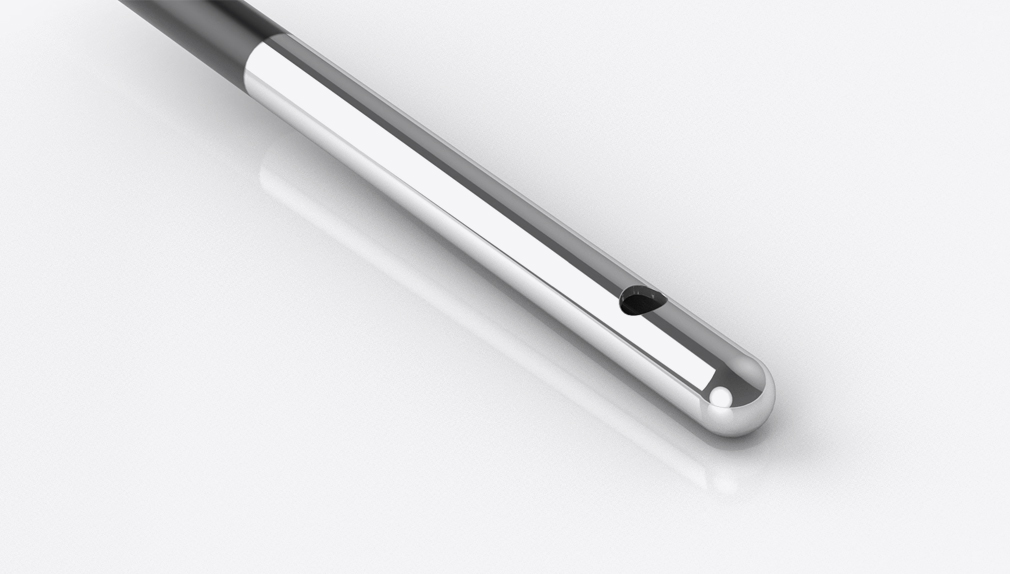
Straight Blunt Needles: Straight blunt needles feature a classic atraumatic tip design that is suitable for a wide range of nerve block and injection procedures. Their straightforward design provides consistent access while maintaining the safety advantages of a blunt tip.
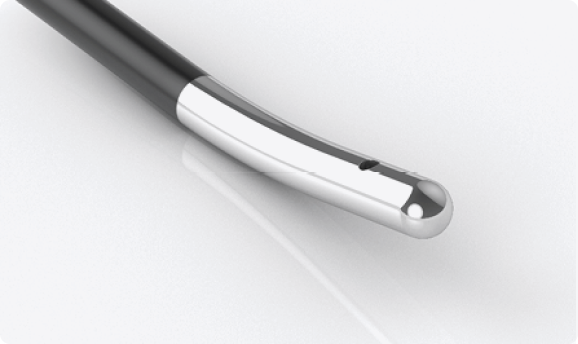
Coudé Blunt Needles: The Coudé configuration includes a curved distal tip designed to improve directional control during needle advancement. This design allows physicians to more easily navigate anatomical structures and target specific areas when performing transforaminal injections or other precise interventions.
Blunt Access Cannula (BAC)
Each Epimed Blunt Needle is introduced through a Blunt Access Cannula (BAC). The BAC provides a controlled pathway for the needle, helping reduce tissue trauma and supporting safe needle advancement.
Using a BAC enhances procedural safety by providing an additional layer of protection during needle insertion and positioning.
Supporting Safer Transforaminal Injections
In transforaminal procedures, precision is essential. Even minor deviations in needle placement can lead to complications or reduced therapeutic effectiveness. Epimed’s blunt needle technology helps reduce these risks by emphasizing atraumatic access and controlled injection.
By combining innovative design features with multiple configuration options, Epimed support physicians in delivering safer, more precise interventional pain procedures.
Minimizing Risk. Every Procedure. Every Time.™
FAQS
Q1: What is the difference between straight and Coudé blunt needles?
Straight blunt needles provide standard access for many procedures, while Coudé needles feature a curved tip that allows improved directional control and navigation.
Q2: Why is a Blunt Access Cannula (BAC) used with blunt needles?
The BAC creates a controlled pathway for needle insertion, helping reduce tissue trauma and supporting safer needle placement during the procedure.
Q3: What procedures can the Epimed Blunt Needles used for?
They are commonly used in interventional pain management procedures such as transforaminal epidural injections and nerve block injections, where controlled needle placement and reduced tissue trauma are essential.
Q4: What are the advantages of using blunt needles for transforaminal injections?
Blunt needles are designed with a rounded atraumatic tip that helps reduce the likelihood of vascular or neural penetration during needle advancement. This design may improve procedural safety while allowing physicians to maintain precise control when navigating sensitive anatomical structures.





 United States